
Salmon Roe vs Caviar — What is the Difference?
Both are fish eggs. Both are delicious. But salmon roe and sturgeon caviar are entirely different products — in species, flavour, texture, colour, price, and the occasions they suit. This guide explains the differences clearly so you can choose the right product for what you have in mind.
What is Caviar?
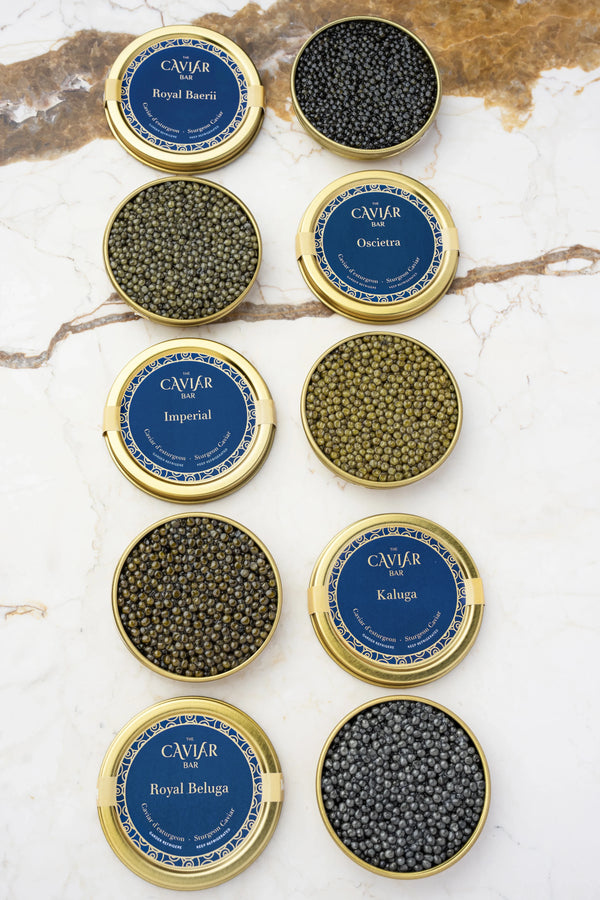
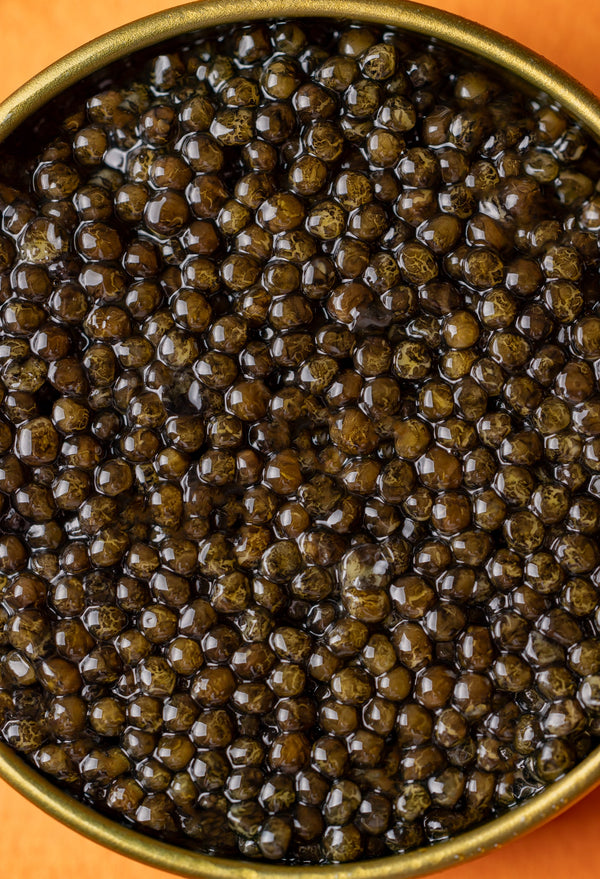
True caviar refers exclusively to the salt-cured roe of sturgeon fish. The major varieties are Beluga, Oscietra, Baerii, and Kaluga. Sturgeon caviar is dark grey to black, with small to medium pearls (2.5–3.5mm), a clean briny flavour, and a delicate pop. It is the most expensive fish roe in the world, reflecting the rarity of the fish and the years required to raise them to maturity. For a full breakdown, see our complete caviar guide.
What is Salmon Roe?
Salmon roe — known as ikura in Japanese cuisine — comes from Pacific or Atlantic salmon. The eggs are significantly larger than sturgeon caviar (4–7mm), bright orange to deep red in colour, and have a distinctly different flavour: sweeter, more intensely "oceanic", with a more pronounced pop and a slight oiliness from the high omega-3 content of salmon.
We stock two varieties of wild salmon roe:
Wild Premium Keta Salmon Roe — from wild-caught Chum (Keta) salmon. Medium-large orange pearls with a clean, lightly briny, sweet flavour. The most accessible salmon roe in both price and flavour — a natural starting point.
Wild Premium King Salmon Roe — from wild-caught Chinook (King) salmon, the most prized Pacific species. Deeper red-orange pearls with a richer, more complex flavour and higher fat content. King salmon roe is a premium product — rarer and more flavourful than Keta, and sought out by chefs and serious buyers for its depth.
Key Differences at a Glance
- Species: Caviar = sturgeon. Salmon roe = salmon.
- Colour: Caviar = dark grey to black. Salmon roe = bright orange to deep red.
- Pearl size: Caviar = 2.5–3.5mm. Salmon roe = 4–7mm.
- Flavour: Caviar = subtle, briny, creamy. Salmon roe = bold, sweet, oceanic.
- Price: Caviar is significantly more expensive, reflecting the rarity of the fish.
- Occasion: Caviar suits classic luxury service and fine dining. Salmon roe suits sushi, Japanese-inspired dishes, and occasions where a bold, visually striking roe is wanted.
Which Should You Choose?
If you want a classic luxury experience — the flavour, the ritual, the prestige — choose sturgeon caviar. Start with Royal Baerii if it is your first time.
If you want a bolder, more immediately striking flavour — or you are preparing sushi, onigiri, or a Japanese-inspired dish — choose salmon roe. Our Wild Keta is the approachable option; Wild King is for when only the best will do.
Both can be served together — a tasting of contrasts. Salmon roe alongside Oscietra on blinis makes a visually spectacular and flavourfully interesting serve.
Nutritional Comparison
Both are nutritionally exceptional — rich in omega-3 fatty acids, vitamin B12, vitamin D, and complete protein. Salmon roe has a slightly higher fat content than sturgeon caviar, reflecting the higher fat content of salmon generally. For the full nutritional profile of sturgeon caviar, see our caviar nutrition guide.
Shop Roe
Wild Premium Keta Salmon Roe →
Wild Premium King Salmon Roe →
Royal Baerii Caviar from £12 →
Oscietra Caviar from £14 →