
Is caviar good for you? Yes. Caviar is one of the most nutrient-dense foods available — a 30g serving delivers a significant dose of omega-3 fatty acids, complete protein, vitamin B12, vitamin D, selenium and iodine, with zero sugar and few calories. The one thing to watch is its salt content. For most people, in normal serving sizes, caviar is a genuine nutritional positive.
Caviar has a reputation for luxury, but its nutritional profile is genuinely remarkable. A 30g serving — the size of a starter portion — delivers meaningful quantities of omega-3 fatty acids, complete protein, vitamin B12, vitamin D, selenium and iodine. For a food consumed in such small amounts, the nutrient density is difficult to match.
Caviar nutrition facts (per 100g)
| Nutrient | Per 100g |
|---|---|
| Energy | 252 kcal |
| Protein | 27.5g |
| Fat (total) | 13.5g |
| of which omega-3 | ~6.5g |
| Carbohydrates | 6.4g |
| Sugars | 0g |
| Salt | 2.7g |
| Vitamin B12 | ~20µg (800% RDA) |
| Vitamin D | ~3.5µg |
| Selenium | ~36µg |
| Iron | ~11mg |
The health benefits of caviar
Omega-3 fatty acids
Caviar is one of the richest food sources of long-chain omega-3 fatty acids (EPA and DHA) available. These are the forms the body can use directly — unlike the ALA found in plant sources, which must be converted inefficiently. Omega-3s are associated with reduced cardiovascular risk, lower inflammation, improved brain function and better eye health. A 30g serving of caviar can provide a significant proportion of the weekly omega-3 intake recommended by the NHS.
Complete protein
Caviar contains all nine essential amino acids, making it a complete protein source. At 27.5g of protein per 100g, it compares favourably with chicken breast or salmon, and the protein is highly bioavailable — meaning the body absorbs and uses it efficiently.
Vitamin B12
Caviar is extraordinarily rich in vitamin B12, providing around 800% of the recommended daily intake per 100g. B12 is essential for red blood cell formation, neurological function and DNA synthesis. It is found almost exclusively in animal products, making caviar an exceptional source for those who eat fish.
Selenium
Selenium is a trace mineral that plays a role in thyroid function, immune response and antioxidant defence. Caviar provides meaningful selenium in a small serving.
Iodine
As a marine product, caviar is a natural source of iodine — an essential mineral for thyroid hormone production that is often under-consumed in Western diets.
Are there any downsides?
Sodium
Caviar is salted during the malossol curing process. At around 2.7g of salt per 100g, it is relatively high in sodium compared with other protein sources. Those on a medically restricted low-sodium diet should factor this in. For most people consuming caviar in typical serving sizes (15–30g), the sodium contribution is modest.
Cholesterol
Caviar contains dietary cholesterol. However, current scientific consensus — reflected in both NHS and USDA guidelines — is that dietary cholesterol has a much smaller effect on blood cholesterol than previously believed. Saturated fat is considered a more significant factor, and caviar's fat profile is dominated by unsaturated and omega-3 fats rather than saturates.
How much caviar should you eat?
Caviar is a condiment, not a staple. Typical serving sizes are 7–20g per person. At these amounts, the nutritional benefits are real and the sodium and cholesterol intake is minimal. There is no evidence that consuming caviar in normal serving quantities poses any health risk for the general population.
Which caviar is most nutritious?
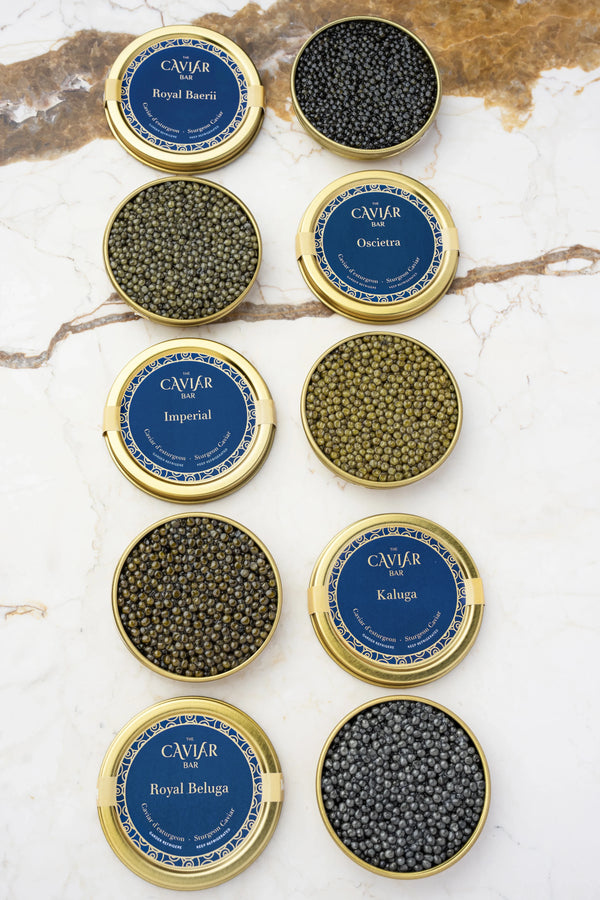
All sturgeon caviars — Beluga, Oscietra, Kaluga, Imperial and Baerii — share a broadly similar nutritional profile. The differences between species are small. What matters more is freshness and quality: caviar that has been properly handled and stored retains its nutritional content fully, while old or poorly stored caviar loses both flavour and nutritional integrity.
At The Caviar Bar, every tin is freshly packed to order and delivered chilled. Our Royal Baerii is the most accessible entry point, while Oscietra and Royal Beluga sit at the premium end of the range.
The verdict
For most people, caviar is a nutritional positive. It delivers exceptional quantities of omega-3, complete protein and B12 in a small serving. The sodium content is something to be aware of, but in typical portions it is not a concern. If you are going to indulge in a luxury food, caviar is arguably the most nutritionally justified choice you can make.
Related reading: What is caviar? · Caviar price guide · How to eat caviar
Frequently asked questions
Is caviar healthy?
Yes. Caviar is nutrient-dense — high in long-chain omega-3 fatty acids (EPA and DHA), complete protein and vitamin B12, while being naturally low in carbohydrates and sugar. The main consideration is its salt content, but in typical serving sizes of 15–30g the sodium contribution is modest.
How much caviar should you eat?
Caviar is a condiment rather than a staple. A typical serving is 7–20g per person. At these amounts the nutritional benefits are real and the sodium and cholesterol intake is minimal.
Which caviar is the healthiest?
All sturgeon caviars — Beluga, Oscietra, Kaluga, Imperial and Baerii — share a broadly similar nutritional profile. Freshness and quality matter more than species: properly handled, chilled caviar retains its full nutritional value.
Is caviar high in cholesterol?
Caviar contains dietary cholesterol, but current NHS and USDA guidance holds that dietary cholesterol has a much smaller effect on blood cholesterol than once thought. Caviar’s fat is dominated by unsaturated and omega-3 fats rather than saturated fat.
Is caviar suitable for keto or low-carb diets?
Yes. Caviar is high in protein and healthy fats with minimal carbohydrates and zero sugar, making it well suited to keto and low-carb diets.