
What is Caviar?
Caviar is the salt-cured roe (eggs) of sturgeon fish. It is one of the oldest and most prized luxury foods in the world, served at the tables of tsars, emperors, and heads of state for centuries. Today, all commercially available caviar comes from farmed sturgeon — the wild Caspian and Beluga populations are strictly protected under international CITES regulations.
True caviar refers exclusively to sturgeon roe. Other fish roes — salmon, trout, lumpfish — are often sold as “caviar” in supermarkets but are entirely different products. This guide covers genuine sturgeon caviar only.
What Fish Does Caviar Come From?
Caviar comes from sturgeon — a family of ancient, large, slow-maturing fish that have existed virtually unchanged for over 200 million years. There are around 27 species of sturgeon, of which a handful are farmed commercially for their roe:
- Huso huso — the Beluga sturgeon, producing the most prized and expensive caviar in the world
- Acipenser gueldenstaedtii — the Russian sturgeon, source of Oscietra caviar
- Acipenser baerii — the Siberian sturgeon, source of Baerii caviar and the most widely farmed species
- Huso dauricus — the Kaluga sturgeon, source of Kaluga caviar (also known as River Beluga)
Types of Caviar
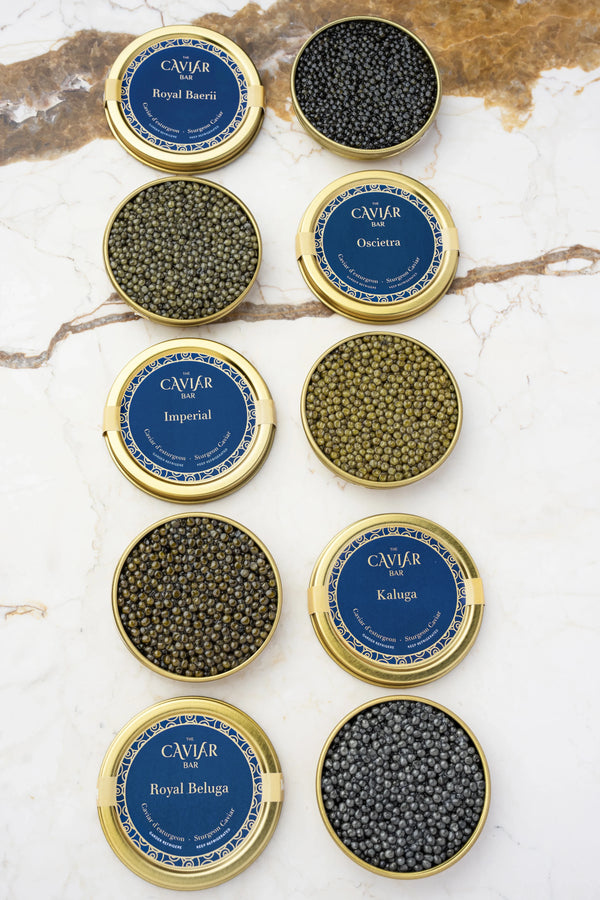
Beluga Caviar
The rarest and most expensive caviar in the world. Large steel-grey pearls (3–3.5mm), extraordinarily gentle and creamy flavour with a long, silky finish. Our Royal Beluga starts from £74.40 for 30g.
Oscietra Caviar
The connoisseur’s choice. Medium-large golden-brown pearls (2.9–3.2mm) with a complex nutty, buttery flavour and more depth than Baerii. Our Oscietra starts from £36.90 for 30g.
Baerii Caviar
The ideal entry-level sturgeon caviar. Medium dark-grey pearls with a clean, briny, buttery flavour that is immediately appealing. Our Royal Baerii starts from £29.10 for 30g — the best starting point for anyone new to caviar.
Kaluga Caviar
Often called River Beluga — Kaluga (Huso dauricus) is the closest freshwater relative of the Caspian Beluga, producing large golden-brown pearls with a rich, creamy flavour. A genuine alternative to Beluga at a lower price point. Our Royal Kaluga starts from £45.90 for 30g.
Kaluga Hybrid (Imperial Caviar)
A crossbreed of Amur sturgeon and Kaluga, producing distinctively golden roe with a rich buttery character unique in the UK market. Our Imperial Caviar starts from £39.90 for 30g.
What Does Caviar Taste Like?
At its best, caviar tastes of the sea — clean, briny, and mineral — with a richness that varies enormously by species. All sturgeon caviars share a characteristic “pop” as the eggs burst on the palate, releasing their flavour. The brininess (from the malossol curing process) is present but should never overwhelm. The aftertaste — the “finish” — can linger for minutes in high-quality Beluga.
Common tasting notes across species: butter, cream, hazelnut, ocean, minerality. Beluga tends toward the delicate and creamy end; Baerii toward the clean and briny; Oscietra toward the complex and nutty.
What is Malossol Caviar?
Malossol is a Russian term meaning “little salt” — referring to caviar processed with less than 4% salt. This is the benchmark for premium caviar. The low salt level allows the natural flavour of the roe to come through clearly. All the caviars we stock are malossol grade.
How Much Does Caviar Cost?
- Royal Baerii — from £29.10 for 30g
- Oscietra — from £36.90 for 30g
- Imperial Caviar — from £39.90 for 30g
- Royal Kaluga — from £45.90 for 30g
- Royal Beluga — from £74.40 for 30g
How to Eat Caviar
Always use a mother-of-pearl spoon — never metal, which reacts with caviar and creates an unpleasant metallic taste. Serve cold from the tin on a bed of crushed ice. Classic accompaniments include warm blinis with crème fraîche. See our full How to Eat Caviar guide for detail.
New to Caviar? Start Here
Our Taster Duo Gift Set (£66) includes 30g each of Royal Baerii and Oscietra — the perfect side-by-side introduction. Or read our Caviar for Beginners guide for a full walkthrough.